
Living space
The end of open plan as a dogma
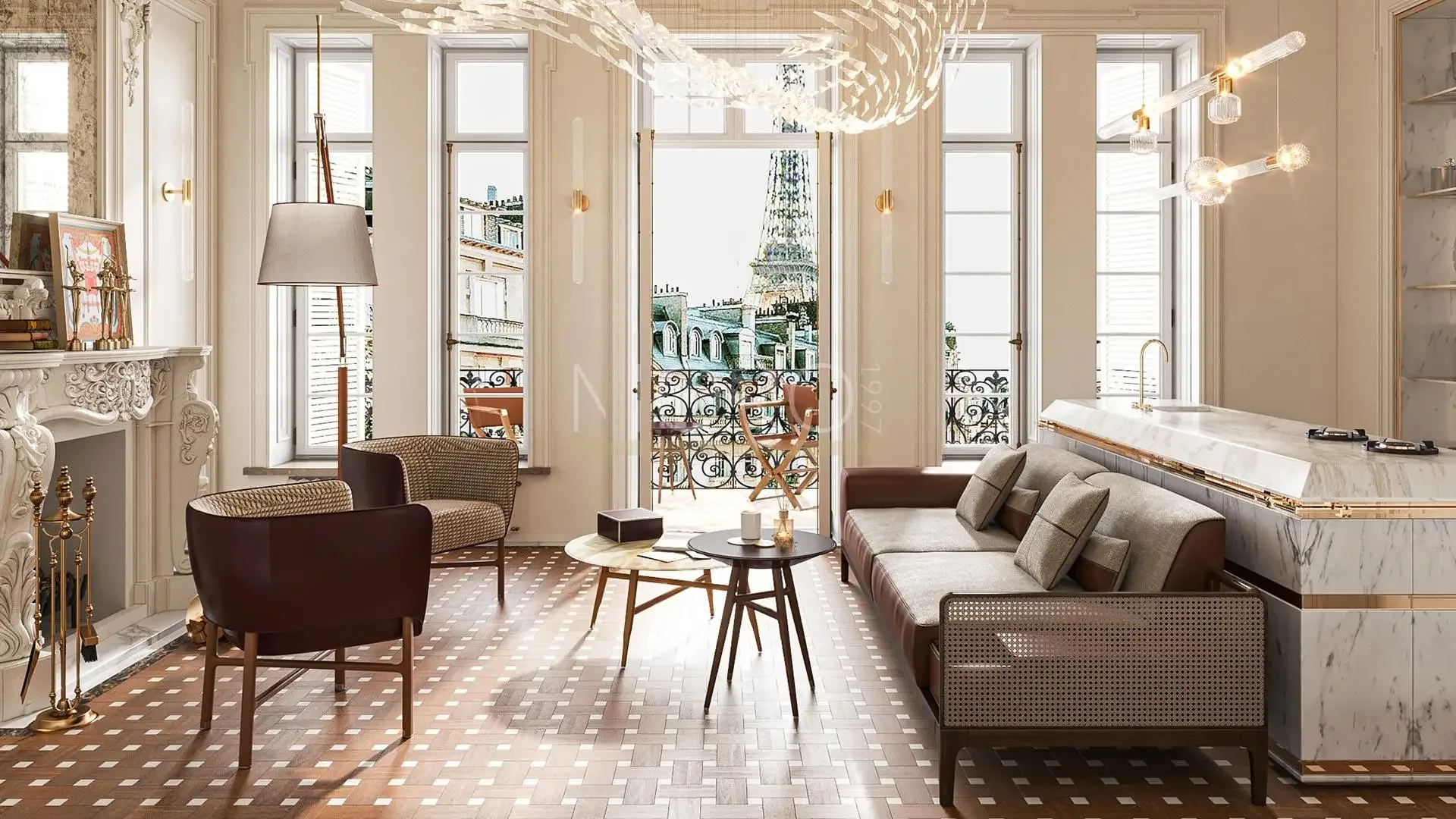
For two decades open plan was almost a requirement of the modern home: knock down the walls, join kitchen, living and dining, let the light in. Today the design press increasingly writes about the opposite movement. 'Broken plan' — a partly divided space, zones suggested without solid walls — is discussed as a more mature answer to how people live after several years of working from home.
What open plan promised and what it took away
It promised light, space and togetherness, and largely delivered them. In return it quietly took away silence, privacy and the ability to close a door. When the home also became office, classroom and meeting room, the absence of boundaries turned from a virtue into a problem: sound travels across the whole flat, no activity has its own corner, and the smell of dinner lives in the living room. The 'broken plan' conversation is not a rejection of light, but an attempt to recover control without losing air.
The room returns in another form
The return of rooms does not mean a return to corridor plans of blind little cells. International examples show a finer instrument: changes of level, translucent partitions, see-through shelving, glass doors, a shift of floor material. The zone is marked, yet light and connection between spaces remain. This is harder than knocking everything down or walling everything off, and it calls for a decision at the design stage, not the arrangement of furniture in a finished box.
What MORO DESIGN sees here
We consider neither open nor closed plan right in itself. Layout follows how a particular family lives, works, receives guests and stays alone. The change in international fashion only reminds us what it costs to design from a trend: in a few years the trend changes, but the rebuilt walls remain. That is why our first question is not 'open or close', but 'which ways of living should this space support' — and it is from the answer that the boundaries arise.
'Open' and 'broken plan' are two instruments, not two camps. The mistake is not in choosing one of them, but in choosing before you understand whose life you are building for. A good layout does not look fashionable or old-fashioned. It looks fitting, and that impression lasts longer than any trend.
Sources